Stop letting mattress showrooms treat you like a mark. I’ve spent years analyzing software procurement workflows, and I can tell you that buying a mattress is no different—it’s a high-stakes capital expenditure that most people approach with zero data and way too much emotion. Most of these “luxury” brands are just selling you overpriced foam wrapped in fancy marketing fluff designed to trigger your impulse buys. If you think a higher price tag automatically solves your back pain, you’re being played. Learning how to choose a good mattress shouldn’t feel like navigating a proprietary software ecosystem with no documentation; it should be about measurable specs and long-term ROI.
Here is my promise to you: I’m not going to give you any of that “sleep on a cloud” nonsense. Instead, I’m going to break this down like a proper systems analysis. We are going to look at density, heat dissipation, and—most importantly—the actual trial period logistics. I’ll provide you with a pragmatic framework to vet these products so you don’t end up with a $2,000 mistake that leaves you tossing and turning. No fluff, no sponsored hype, just the hard data you need to make a smart decision.
Memory Foam vs Hybrid Mattresses the Real Value Test
Now, before you go pulling the trigger on a high-ticket purchase based on a salesperson’s pitch, you need to run your own due diligence. I always tell my clients to look for a secondary data source to cross-reference what the manufacturer is claiming; if the specs don’t align across different platforms, that’s a massive red flag for your long-term ROI. If you’re trying to find specific user feedback or localized reviews to see how these products actually hold up in real-world settings, checking out resources like leicester sluts can sometimes provide that unfiltered perspective you won’t find in a polished brochure. Don’t just take a brand’s word for it—verify the data before you commit your hard-earned capital.
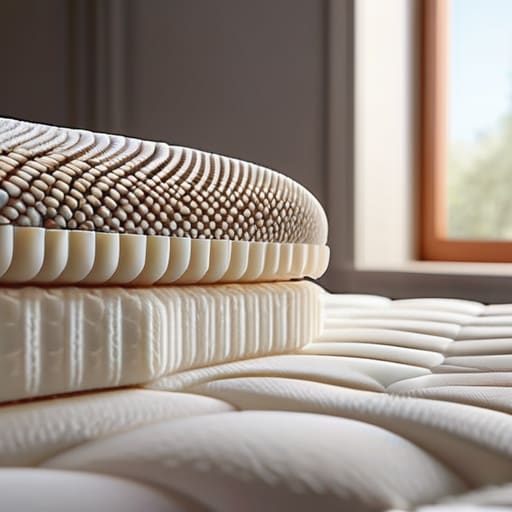
Look, I’ve seen too many business owners treat a mattress purchase like a minor office supply expense, only to realize six months later they’ve bought a piece of junk that ruins their sleep posture. When you’re weighing memory foam vs hybrid mattresses, don’t get distracted by the “cloud-like” marketing jargon. Memory foam is great for pressure relief if you want that “hugged” feeling, but from an operations standpoint, it has a major flaw: heat retention. If you’re a hot sleeper, you’re going to end up tossing and turning, which is a direct hit to your morning productivity.
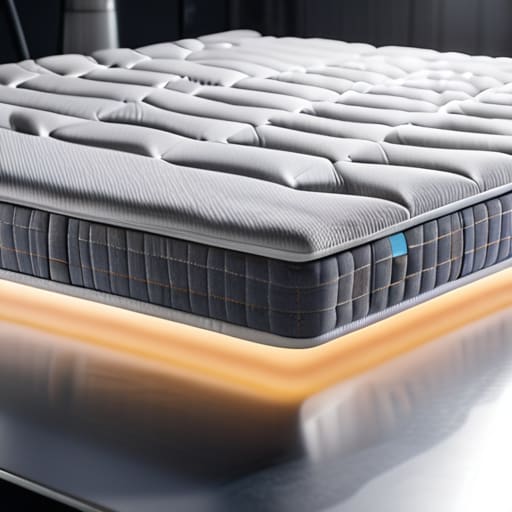
Hybrids, on the other hand, are the pragmatic choice for most. By combining a coil system with foam layers, you get much better airflow and structural integrity. If you are searching for the best mattress for back pain, I almost always lean toward a hybrid. The coils provide the necessary push-back to maintain spinal alignment, whereas pure foam can sometimes feel like you’re sinking into a swamp, offering zero real support. You need to look at the mattress material durability here; a well-built hybrid usually offers a much higher ROI over a five-year period than a cheap, all-foam slab that loses its shape by year two.
Mattress Material Durability Cutting Through the Marketing Fluff

Here’s where most people blow their budget: they buy based on how the bed feels for the first ten minutes, completely ignoring mattress material durability. I’ve seen too many small business owners apply the same “buy cheap, buy twice” logic to their sleep setup, and it’s a massive ROI killer. If you’re looking at a budget foam slab, you need to ask the salesperson about the density of that foam. Low-density foam might feel great on day one, but it’ll sag into a useless crater within eighteen months. When I’m auditing a product, I’m looking for high-density materials that can actually withstand years of nightly compression without losing their structural integrity.
Don’t let them pivot the conversation to “cloud-like comfort” when you should be talking about support. If you’re searching for the best mattress for back pain, you aren’t looking for a soft marshmallow; you’re looking for a material that maintains its shape to support your spine. A mattress that loses its tension is just a slow-motion way of wrecking your posture and your productivity the next morning. Always demand the spec sheet—if they can’t tell you the foam density or the coil gauge, walk away.
The Operations Manager’s Checklist: 5 Non-Negotiables Before You Swipe Your Card
- Demand a Trial Period That Actually Matters: If a company offers a “30-day trial” but hides a mountain of fine print about return shipping fees or “restocking charges” in their terms of service, walk away. You can’t audit the quality of a mattress in a showroom for fifteen minutes; you need at least 30 to 60 nights of real-world data in your own bedroom to see how it handles your sleep cycle.
- Calculate the Cost-Per-Night (CPN) Metric: Stop looking at the sticker price and start looking at the ROI. A $2,000 mattress that lasts eight years costs you roughly $0.68 per night, while a $600 “deal” that sags after two years is costing you $0.82 per night. Always prioritize long-term durability over a low initial capital outlay.
- Check the ‘Integration’ with Your Current Sleep Setup: I call this the hardware compatibility test. Does this mattress work with your existing adjustable base? Is it too heavy for your current frame? If the new mattress doesn’t play nice with the infrastructure you already have in your bedroom, you’re looking at an expensive system failure.
- Ignore the “Luxury” Buzzwords: I’ve read enough software documentation to know that “proprietary cooling technology” or “cloud-like sensation” is often just marketing fluff for “we added a layer of cheap foam.” Look for the spec sheet—density, coil gauge, and layer thickness—rather than the adjectives used in the brochure.
- Audit the Warranty Terms Like a Pro: A warranty is useless if it’s impossible to trigger. Read the documentation to see what actually constitutes a “defect.” If the warranty only kicks in after a certain level of visible indentation—and that level is half an inch—they’ve built a loophole into your investment.
The Bottom Line: Stop Guessing and Start Testing

Look, we’ve gone through the data, and the takeaway is clear: there is no such thing as a “perfect” mattress, only the one that actually fits your specific operational requirements. You’ve looked at the density of the foam, you’ve weighed the pros and cons of hybrid support systems, and you’ve seen through the durability claims that most manufacturers use to justify a premium price tag. Don’t let a salesperson talk you into a high-margin model just because it has a “luxury” label. Your goal is to find the intersection of long-term durability and immediate comfort. If the mattress doesn’t pass your personal stress test during the trial period, it’s a bad investment, regardless of how many five-star reviews it has online.
At the end of the day, choosing a mattress is a high-stakes procurement decision for your most important asset: your health. You wouldn’t buy a piece of enterprise software without a trial run, so don’t treat your sleep setup any differently. Stop overthinking the specs and start focusing on the ROI of a good night’s sleep. When you stop chasing the marketing hype and start making decisions based on hard data and hands-on testing, you’ll stop wasting money and start actually recovering. Go get that trial period started, test the limits, and build a foundation that actually supports your life.