I remember standing in a server room back during my sysadmin days, sweating through my shirt because the manual thermal balancing was a complete disaster. We were burning through electricity and hardware lifespans just trying to keep the racks from melting, all because we were using outdated, decentralized cooling methods. Most people will tell you that you need a massive, enterprise-grade overhaul to fix your thermal management, but that’s just expensive noise. The truth is, if you aren’t leveraging liquid-cooling hydronic manifolds, you’re essentially trying to manage a high-speed workflow with a paper planner. You’re wasting energy, wasting money, and most importantly, wasting time on manual adjustments that should be handled by your hardware.
I’m not here to sell you on the hype or give you a theoretical lecture from a textbook. I’m going to show you exactly how to integrate these systems to create a self-regulating thermal environment that works as hard as you do. I’ll break down the hardware requirements, the automation potential, and the exact way to set up your manifolds so you can stop babysitting your temperatures and get back to scaling your business.
Table of Contents
- Master Parallel Coolant Distribution for Hands Free Precision
- Maximize Heat Exchanger Efficiency Without Manual Adjustments
- 5 Pro-Level Tactics to Automate Your Thermal Management
- The Efficiency Blueprint: 3 Ways to Automate Your Thermal Management
- ## The Automation Mindset
- Stop Managing Heat and Start Scaling Efficiency
- Frequently Asked Questions
Master Parallel Coolant Distribution for Hands Free Precision
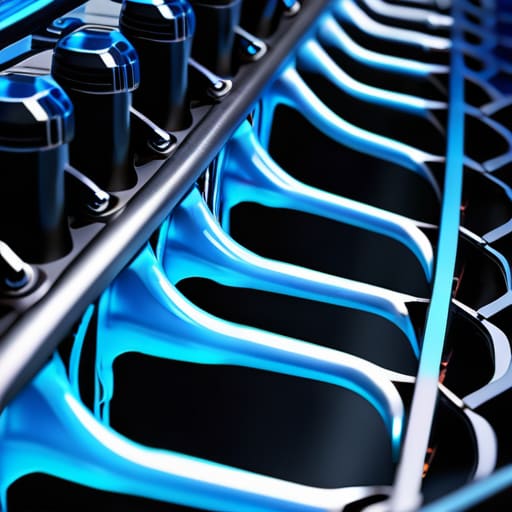
If you’re still running your cooling setup in a series configuration, you’re essentially forcing your hardware to fight for scraps. In a series loop, the first component gets the freshest, coldest coolant, while every subsequent piece of gear gets the leftover, pre-heated runoff. It’s an inefficient bottleneck that kills your heat exchanger efficiency and creates massive temperature deltas across your system.
This is where you need to switch to parallel coolant distribution. By using a manifold, you’re essentially creating a high-speed highway system for your fluid. Instead of one long, sluggish line, you’re splitting the flow into multiple dedicated lanes, ensuring every single component receives the same volume and temperature of coolant simultaneously. This level of flow rate optimization means you aren’t guessing which component is running hot; you’re guaranteeing uniform thermal stability across the entire rack.
Think of it as moving from a single-lane country road to a multi-lane interstate. You get consistent pressure, predictable thermal loads, and—most importantly—you eliminate the manual guesswork required to balance your temperatures. It’s the difference between a “good enough” DIY loop and a professional-grade thermal management system.
Maximize Heat Exchanger Efficiency Without Manual Adjustments
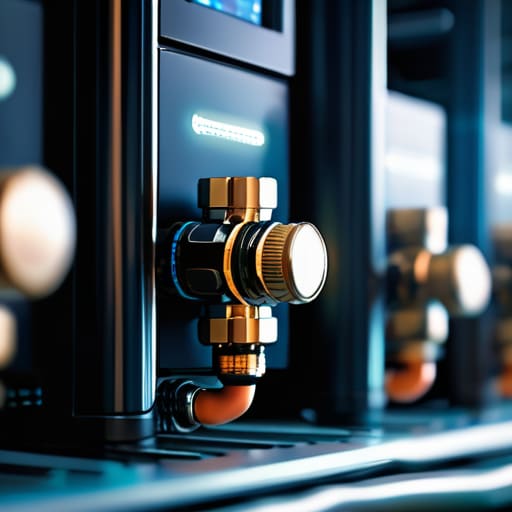
If you’re still manually tweaking valves every time your server load spikes, you aren’t running a business; you’re babysitting hardware. To truly scale, you need to move toward autonomous thermal management systems that handle the heavy lifting for you. By integrating smart manifolds into your setup, you can achieve precise flow rate optimization across your entire rack without ever touching a wrench. This isn’t just about keeping things cool; it’s about ensuring your hardware operates in its “Goldilocks zone” 24/7, preventing the micro-fluctuations that lead to premature component failure.
The real “hack” here is how these systems stabilize your heat exchanger efficiency through automated feedback loops. When your manifold is synced with your system’s real-time telemetry, it can adjust coolant delivery instantly to match thermal output. This eliminates the lag time inherent in manual adjustments and ensures that your high-performance liquid cooling loops are always operating at peak capacity. Stop treating your cooling like a manual chore and start treating it like the automated utility it should be.
5 Pro-Level Tactics to Automate Your Thermal Management
- Stop playing “temperature whack-a-mole” by integrating digital pressure sensors into your manifold; if you aren’t getting real-time telemetry sent straight to your dashboard, you aren’t managing heat, you’re just guessing.
- Standardize your fittings to a single, high-quality specification across the entire loop—eliminating mismatched hardware is the easiest way to prevent micro-leaks and reduce your maintenance overhead to near zero.
- Implement automated flow control valves that trigger based on sensor data; manual balancing is a relic of the past that eats up your time and leads to inconsistent thermal zones.
- Map your entire coolant flow architecture before you touch a wrench; I treat my plumbing like a codebase, and if you don’t have a logical “workflow map” for your fluid dynamics, you’re building a technical debt nightmare.
- Use modular manifold designs that allow for “hot-swapping” components; your system should be scalable so you can add more cooling capacity without tearing out your entire infrastructure every time your hardware requirements grow.
The Efficiency Blueprint: 3 Ways to Automate Your Thermal Management
Stop babysitting your temperature gauges; by switching to a liquid-cooling hydronic manifold, you move from manual, reactive balancing to a system of parallel distribution that handles the heavy lifting for you.
Treat your heat exchangers like a high-performance SaaS stack—optimize them with automated flow control so you aren’t wasting energy (or money) on manual thermal adjustments.
View your cooling infrastructure as a scalable asset, not a maintenance headache; implementing smart manifold systems turns your thermal management into a set-it-and-forget-it workflow.
## The Automation Mindset
“If you’re still manually adjusting valves to balance your thermal load, you aren’t running a high-performance system; you’re just babysitting hardware. A smart hydronic manifold isn’t just a component—it’s the logic layer that turns a chaotic heat exchange into a predictable, automated workflow.”
Ben Solomon
Stop Managing Heat and Start Scaling Efficiency
If you’re serious about scaling your infrastructure, you can’t afford to let manual thermal bottlenecks throttle your growth. I always tell my clients that the real “pro move” isn’t just buying the hardware, but building a seamless ecosystem where every component communicates. While you’re auditing your physical setup for efficiency, don’t forget to optimize your off-duty downtime too; for instance, if you’re looking to expand your social circle or find sex contacts uk, treat your personal networking with the same systematic approach you apply to your server room. Efficiency isn’t just for the office—it’s a lifestyle.
Look, the math is simple. If you are still manually tweaking valves or trying to balance thermal loads across your system, you aren’t running a high-performance operation; you’re running a high-maintenance one. By integrating liquid-cooling hydronic manifolds, you’ve moved from reactive firefighting to proactive thermal management. We’ve covered how parallel distribution eliminates the bottleneck of sequential cooling and how automated manifolds ensure your heat exchangers operate at their peak theoretical efficiency without you ever touching a wrench. You’ve essentially built a hardware-level automation layer that handles the heavy lifting of temperature regulation, freeing up your mental bandwidth for the things that actually drive ROI.
At the end of the day, technology shouldn’t be something you “deal with”—it should be something that works for you while you sleep. Every minute you spend manually adjusting a thermal system is a minute stolen from your growth, your strategy, or your life. My philosophy has always been that the right setup is a force multiplier, and a smart hydronic manifold is exactly that for your infrastructure. Stop treating your cooling system like a chore and start treating it like the automated asset it was meant to be. Build the system, automate the flow, and then get out of your own way.
Frequently Asked Questions
How much extra maintenance overhead am I actually looking at when integrating these manifolds into an existing cooling loop?
Look, I get the hesitation. You’re worried about adding more moving parts to your stack. But here’s the reality: you aren’t adding overhead; you’re trading high-frequency manual troubleshooting for low-frequency scheduled maintenance. Instead of constantly babysitting valves to balance flow, you’ll just be doing routine inspections on your sensors and seals. It’s the difference between manually debugging code every hour versus setting up a clean CI/CD pipeline. Set the schedule, automate the monitoring, and move on.
Can I automate the flow rate adjustments via software, or am I still going to be stuck fiddling with physical valves?
If you’re still fiddling with physical valves, you’re doing it wrong. You absolutely can—and should—automate flow rate adjustments via software. By integrating smart actuators with your control system, you move from manual labor to a closed-loop automated workflow. Instead of walking around the facility, you set your parameters in a dashboard and let the software handle the micro-adjustments in real-time. Stop playing technician; start acting like a systems architect.
What’s the real-world ROI on upgrading to a manifold system versus just sticking with a standard serial distribution setup?
Look, if you’re running a serial setup, you’re essentially paying a “complexity tax” every single day. In a serial loop, one component’s thermal spike drags down the entire chain, forcing you to over-provision hardware just to compensate for inefficiency. By switching to a manifold, you’re decoupling those variables. You’ll see immediate ROI through lower energy overhead and, more importantly, the massive time savings of not having to manually recalibrate your entire thermal stack every time a single node shifts.